From pilot to P&L: running digital assets as a business
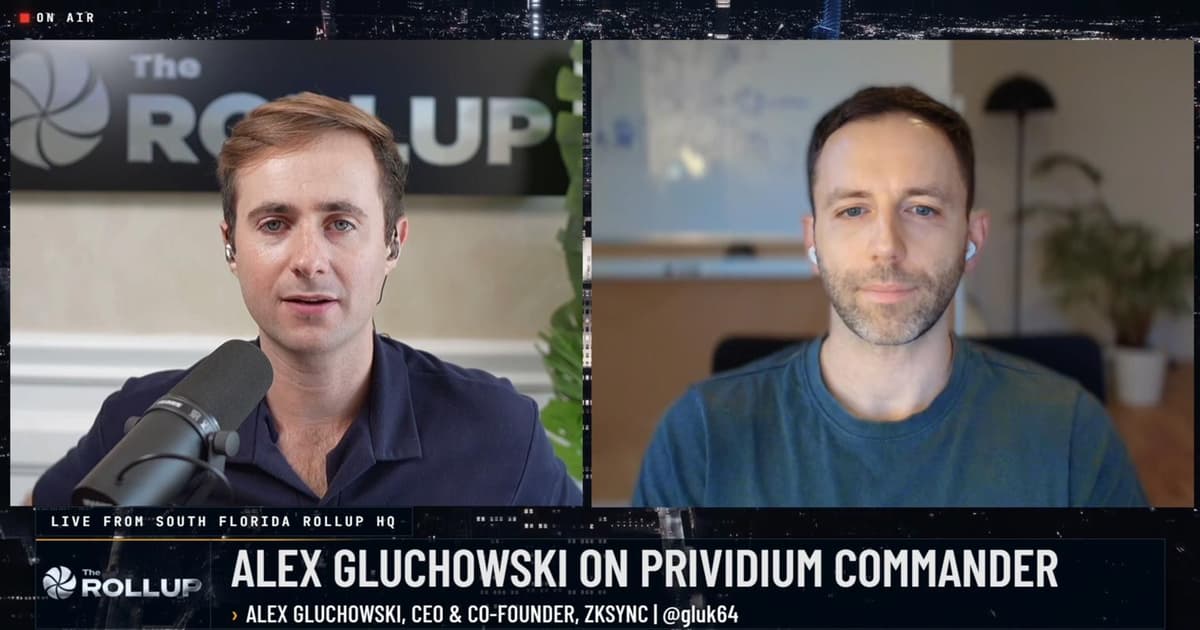
Alex Gluchowski, CEO and co-founder of Matter Labs, moderates a Money20/20 USA panel on running digital assets as a business, with Jason Emery of DTCC, Michael Harris of ICE and Phoebe Kunitomi of Cari Network. They discuss how much of the work sits in reusable infrastructure, what regulators and auditors expect, and how each institution is preparing to scale beyond the pilot stage.
- Why a large share of the effort behind each digital asset service could be reused across applications.
- What regulators and auditors expect from tokenized workflows compared with existing ones.
- How always-on payments change customer service, cash settlement and origination hours for banks.
- How institutions approach fraud controls and payment returns when settlement is final.
Transcript
Alex Gluchowski: Today I’m joined by the representatives of the institutions that are on the front, front of the digital assets, uh, innovation in the world. I’m excited to be joined by, uh, Jason Emery, managing director and head of product at DTCC Digital Assets. Jason leads the product team responsible for DTCC’s blockchain-based financial market infrastructure software. Uh, Michael Harris, who is the vice chairman and global head of capital markets and, uh, at New York Stock Exchange Group, part of the Intercontinental Exchange. Michael leads NYSE global capital markets efforts and its relationships with companies coming into the public markets. And, uh, Phoebe Kunitomi, who is a co-founder and chief product officer, chief marketing officer of the Cari Network. She brings the perspective of building the network and services the institutions will use. Thank you for joining me.
Um, and I want to start by the question of, um, you know, the institutions that are moving into the digital asset space today need the same layer around the technology itself. You need the control layer of who may act, what gets approved before anything executes, how each transaction is tracked across systems, chains, counterparties. And the question is, will each institution build all of this themselves? Will part of that be bought, or what is going to be in, in, insourced, or what is going to be outsourced, out of house? Uh, so Jason, let’s start with you.
Jason Emery: Yeah. So thanks for that question. I’m glad, happy to be here. Um, so I believe that one of the things that’s been going on in the industry for the last several years is kind of a bit of pilot fatigue and a bit of investment fatigue. Now folks are trying to figure out how they’re going to take this technology and really make it beneficial from an economic perspective. And one of the challenges that they have is building out infrastructure on their own, building out the environments, building out connectivity, building out the capabilities that are necessary in order to make this an ecosystem that they can actually make money in.
And so my guess is they’ve been looking for a means to have financial market infrastructure providers step into that gap and provide the capabilities that are necessary to create a broader ecosystem that they can then generate use cases and actually get the efficiency gains and the benefits out of the technology that they’ve got and that they’ve heard so much about. And so my, my thinking on that is financial market infrastructure is in the right place to provide that stability, the kind of investor protections, the kinds of capabilities that are necessary to really make it possible for us to get the benefits out of the technology that folks are looking for.
Alex Gluchowski: Thank you. Michael?
Michael Harris: Yeah, I would agree with a lot of what you said. You know, from our perspective, the New York Stock Exchange, I think the idea around what are the gaps that exist? There’s, the regulatory environment has created, I think, at least a pathway to create greater ownership from our perspective in terms of assigning resources. And so as we kind of think about the idea of kind of build, partner, uh, we really look at many of the partners that are, that we’re currently working with have built kind of world-class technology. Uh, there’s the ability for us to partner with them in terms of being able to bring to the marketplace what we think is kind of the best of both worlds.
And for those of you who may not be familiar, you know, the New York Stock Exchange are in the process of building a separate platform that allows for investors to have the ability to trade on equities 24/7. Uh, at the same time, being able to fund that with stablecoins, but probably more importantly, um, that’s fungible with all underlying equities. So the same investor protections that you would have if you’re buying equities today on a traditional platform are in place, you just have better plumbing. And so from our perspective, we think that the idea of being able to partner with those companies that really have the best-in-class technology, uh, really is being able to bring that, that whole process forward, and kind of the roadmap that’s been set up from a regulatory perspective allows us to do that.
Alex Gluchowski: And Phoebe?
Phoebe Kunitomi: Um, so Cari is a tokenized deposit network built for regional and mid-size banks. And to Michael’s point, obviously banks are heavily regulated. And so for us, what we are doing is standing up all of the onchain infrastructure on behalf of our network, and we’re kind of taking both approaches, right? On one hand, we are partnering with Matter Labs, for example, is our, our network’s L2. Um, but on the other hand, we are, we have to build things ourselves on behalf of our banks. So for example, you know, all of the smart contract layers, because they have to accommodate banks’ like control needs, as well as all of the other products that banks directly integrate with, such as our API layer. And so you have to take both approaches when something doesn’t yet exist on the market.
Alex Gluchowski: That makes sense. And I’m really curious, when you look back at the, at the work that you’ve been doing now over the last, uh, years, how much of the effort actually went into the services themselves versus into this operational wrappers around them and all of this digital plumbing that, that we just discussed? What’s the split?
Jason Emery: Yeah. So I think, um, it’s hard to put a percentage on, on that number, but I would guess that a fairly large percentage, maybe even a, you know, reaching up to fifty percent of the effort in a lot of cases is in stuff that could be reusable, things that could be common across different applications. And so you could, you could see that a financial market infrastructure provider, and even, you know, a tokenization service or an capability around collateral mobility that is a foundation, is something that, uh, that could be useful and common across applications.
From DTCC’s perspective, we’re pretty excited about the launch of the tokenization service that we’re bringing to market just next week. We go live on Wednesday of next week, and this service is going to make it possible for us to create tokenized instances of the assets that are custodied at DTCC. Um, we announced an event in July and proved the concept. We had production, uh, creation of tokens in July, and, and coming in October. At the end of October, we’re going to be going into full production launch of that capability. So we’re really excited about that.
And then really, tokens by themselves don’t add any value. Just having a token version of a US equity is interesting, and it’s kind of nice to say, hey, I’ve got a token in my wallet, but utility is necessary. Why do you want a token? What use case are you going to use? And, and so our thinking, and what we’ve been hearing from clients, is that collateral mobility is really where it’s at. And we’re, we’re focused on that space as well.
Michael Harris: I would agree with a lot of that. I mean, it’s really about, at the end of the day, just what’s the utility for clients and what value can you offer to them? And so from our perspective, it’s really about being able to create in many respects what investors are already relying on in traditional markets and what they like about traditional markets, which are the investor protections, the ability to also have the rights to corporate actions and, and governance, but getting better plumbing and just being able to get access to a lot of the benefits within DeFi that they look to, as far as being able to settle instantaneously and also being able to trade better. So for us, we really do look at kind of trying to bring two great worlds together.
Um, but I think to the earlier question about just how do you think about framing out the resources? It’s really hard to tell. Um, it really depends on just the operational workflows behind them and how much you need to dedicate to each one.
Phoebe Kunitomi: Yeah. For us, um, again, it’s kind of both, right? Because we are a multibank network, um, we need to establish various operational processes in order to actually run the network. So for example, we do have, um, fiat settlement that we’re running through a central settlement bank, and that’s mostly the plumbing. But on the other hand, we also have to spend a tremendous amount of resources on building the products that allow banks to tokenize customer deposits and allow those customers to use tokens for instant payments over our shared, our shared network, aka Prividium. Um, so, you know, these, for us, because we are working with regulated institutions, because there’s a huge coordination aspect of it, we have to build them at the same time.
Alex Gluchowski: So that’s actually a very interesting point that, uh, I agree that assets themselves don’t, uh, don’t make a lot of utility. You need to focus on what actually, what is the value that you bring to the customers. But as regulated entities, you have a lot of rules that need to be followed on the compliance side, on, on, on various institutional, uh, other aspects of control and auditability. Uh, which of these rules, which of these expectations were hardest to meet specifically for digital assets, as you compare it to the more traditional ways to deliver those services?
Jason Emery: I think there have been challenges, um, in a lot of different areas. It’s hard to put your finger on exactly what might have been hardest. Um, and to be honest, it’s all just typing at the end of the day, right? We’re writing software, and, and, um, so it’s, it’s not as difficult as it may seem for us, um, building in those investor protections, making sure that every aspect of what clients have come to expect from the traditional markets is available to them as they move into these new spaces and take advantage of these new ecosystems.
Because honestly, I think folks may not even think about the fact that when they take an asset and put it in token form in one way, it’s actually introducing counterparty risk that didn’t exist when they held that stock traditionally. And so it’s one of those things where I think we need to make sure we educate the clients, understand exactly what they’re doing, and what they get is what they expect. But from a difficulty perspective, I think as we go forward, we need to make sure that we’re, we’re understanding the logic, the, the ways in which the system is operating, and really building in those investor protections.
Michael Harris: And I think the other thing I’d add is, you know, when you think about it from the regulatory and the audit perspective, um, you know, regulators and auditors, they want things to work exactly the same way as it would in any other, uh, workflow. So when we have to build a separate system that’s tokenized, we have to also think about it from the perspective that the regulators and auditors want it to work exactly the same way as it would in any other workflow. So it can’t be any different. It has to have the exact same framework. It has to have the same standards, um, but also the same ease of use in terms of them being able to actually verify transactions. It becomes more complicated when you’re working with different counterparties and different partners and different workflows to begin with on a tokenized basis. But ultimately, you have to also think about it. For all of us that work in very regular, heavily regulated environments, the auditors and the regulators, you know, they don’t really care about that. They just want to make sure that the workflows are exactly the same way.
Phoebe Kunitomi: So yeah, so, you know, Cari’s initial use case is being able to obviously tokenize deposits and then power, you know, instant, always available payments. Um, that always available, always on causes a lot of issues, right? I mean, banking hours are, have always been restricted to, to business hours, Monday, Monday through Friday. And, you know, this real-time aspect introduces net new requirements on the operational front for our banks. So for example, you know, the bank’s customer service teams might not be working at 10 p.m. on a Saturday, which poses issues, issues if a company is trying to originate a payment at that time, runs into something and can’t pick up the phone to figure out how to troubleshoot.
Another aspect of this is that the fiat settlement, like, so there’s a cash leg to every tokenized deposits payment that needs to eventually be settled, and that risk can build up over the, in the system, um, over the weekend or over the holiday, uh, while the settlement bank is closed. So I think what we’re doing, what we’re doing with our banks is just kind of a crawl, walk, run approach, right? So for example, you know, with our banks, they have to be able to receive all the time, but maybe they only allow their customers to originate during business hours, or kind of an extended business hours, but can close over the weekend for origination. And then as they build out their teams, their processes, then they can, you know, become a lot more like a real-time onchain money movement ledger.
Jason Emery: So yeah, and just to build on that a little bit, that, that whole crawl, walk, run approach is really, resonates with me. That’s exactly how we’re going to market with this solution as well. And, and one of the challenges that we’re seeing is that, that the, the counterparties have a lot of work to do to really understand their role and how to do the integrations that they need to do in order to take advantage of these new capabilities. So just bringing the assets to market doesn’t mean that the processes, the back-office integrations, the new technology that needs to be adopted, the regulatory changes that have to make, that clients have to make, is there yet. And so the adoption of this new technology is oftentimes limited by all of that ecosystem buildup of capability that you’re describing as well.
Michael Harris: And I think it’s a great point. You know, it’s like the, in some cases, like the technology is the easy part. Um, but it’s everything else that follows behind it. That’s really the challenge. Um, particularly on the counterparty side, you know, from our end, we think about it in terms of you have issuers, you have traders, you have market makers, you have the clearing part of the business, the settlement part of the business, the transfer part of the business. They all, those different parties, to your point, really need to be able to actually understand the workflows, and comfortably. So the technology is kind of the easy part of it.
Alex Gluchowski: So that’s very interesting. We’ve been discussing so far heavily focusing on the complexities and challenges. And yet digital assets actually move from pilots to production now in a lot of places. And you can also feel it in the atmosphere of this conference. Um, so I think the, it’s going to be really interesting for the audience to, to learn what actually changed, what prompted this acceleration over the last twelve months? Like, what was it, regulatory changes? Was it, uh, the technological breakthroughs, client demand, or maybe competition and pressure from the, uh, public, um, uh, digital asset markets? What’s your take?
Jason Emery: Yeah, I’d say it’s all of the above. Honestly, I think the regulatory environment has obviously been a little bit more easy to work with. And we’ve gotten some rulings out of the SEC that have been beneficial to the innovation and the movement forward into production of some of these capabilities. And so I think that’s certainly one aspect of it. I also think people are now comfortable with the idea that the technology works. You know, for a few years folks were not sure. Is there going to be an issue, or is there something here that’s not going to work? And I think that we’ve gotten over the hurdles, you know, and I think folks understand that this technology will work and we can make it work. And so I think that’s, that’s not been a barrier.
And I think there is more client demand now. I think that use cases are actually coming to, to the forefront where you can actually really see the ROI that’s possible in investing in this kind of capability. And so use cases are actually coming to the forefront that people think are going to be useful. And so I think all of the above is really the answer.
Alex Gluchowski: Michael?
Michael Harris: Yeah, I’d agree with that. I think, you know, the biggest challenge sometimes is, without the regulatory roadmap, it’s much more difficult, especially within large organizations, to get the resources behind, um, teams to be able to actually manage these projects. Um, because even though the technology is there, making sure that there is actually going to be a roadmap to get the ROI and to actually measure success over time is very challenging. So, um, the really positive regulatory framework over the last couple of years has been incredibly helpful. It allows us to be able to assign resources internally to try to create products around it. Um, but, you know, I think for us, that’s really, it’s a combination of all those things, but the regulatory roadmap creates the framework and the roadmap for us to be able to get resources.
Alex Gluchowski: Makes sense.
Phoebe Kunitomi: Yeah. For us, it definitely was the new administration. So under the former president, you know, I’m sure any crypto enthusiasts are, have heard about Operation Chokehold, and, um, banks for a very long time, and, you know, continue to today, were pretty allergic, right, to touching anything related to crypto, including the blockchain technology. I think that flip, that switch flipped when we got the Trump administration in. And then, of course, GENIUS was allowed to pass. Now, tokenized deposits are excluded from the definition of a payment stablecoin under GENIUS. There isn’t a ton of regulatory clarity for us for our specific product set. However, you know, there is some guidance coming out of the FDIC, for example, as well as, you know, in some speeches by Travis Hill. So still, for us, pretty new, but I think just being allowed to, like, touch this technology within a bank has been really enabled by the political climate.
Michael Harris: The other thing I would just also note is that I think there’s also a benefit with success. You know, when you have use cases, whether it’s stablecoin or even just Bitcoin trading at very high prices and people actually making money off of the underlying technology, um, that will be, you know, success breeds success. And so I think that helps pave the way for not only people at the consumer level, but more importantly at the enterprise level, to start seeing where the use cases could actually lead over the course of the next several years.
Alex Gluchowski: This makes sense. Um, and now as you, your institutions move towards production, uh, you mentioned the crawl, walk, run approach. Uh, and, um, from what we see in the, in the acceleration of digital asset markets, the run phase might come much earlier than, than people anticipate. How are you preparing for this? Like, what, how, you know, with, with more volume comes more scrutiny, um, more counterparties to manage, more, um, uh, transaction volume potentially. Like, how are you preparing for this scale? Like, do you have it in mind, or is this something that you anticipate to, to approach as, as it comes closer?
Jason Emery: So, um, that’s actually an interesting question for me. I joined DTCC from a startup. We were acquired by DTCC, and as a startup, I think it was, it was clear early on that in order to really create the momentum and adoption that would create scale in the industry, you had to be part of the industry to do that. And so being part of DTCC, DTCC DNA is scalability. I think we do hundreds of trillions of dollars of transactions every day. And so building the solution that we’re bringing to market just on Wednesday, we, we built that kind of capability into the solution from the start.
You know, so although we’re seeing this crawl, walk, run approach in the industry, the technology, the capability, the support infrastructure, the risk management, all of that stuff is in place from day one, so that as the market starts to be able to take up that technology and take up, the capabilities will be there with them. I think, I think you have to take that approach because of what you said, that we don’t really know how quickly it could accelerate. And so we need to be, be ready as the infrastructure to be able to support that acceleration and go as fast as the industry wants to go. And our regulators are looking at that, you know, so they, they want to see that we’ve got all the right risk management capabilities in place, that we’ve got all the right support infrastructure and capabilities in place from day one. And that’s the way it’s got to be.
Michael Harris: Yeah, it’s very similar. I mean, from our perspective, we also have the added issue of just, like, a very large spotlight in terms of, you know, the symbolism of American capitalism being looked at in terms of the success of these platforms. And so there is, uh, you know, from our standpoint, we want to make sure that as volumes ramp up across the industry, that, uh, the systems, the partners that we’re working with, and the infrastructure is up and running from day one, and it’s flawless. And so there’s an extraordinarily high bar to be able to do that. But that also means that when we think about the partners that we work with, and when we think about the infrastructure that we’re building, and we were thinking about just the ecosystem that we’re working within, in terms of all those other partners that I mentioned earlier, the broker-dealers and the other market makers and such, everything has to be top tier, and it has to be operational on day one.
Phoebe Kunitomi: Um, very similar as both. Cari is pretty fortunate in that we are a zero-to-one startup. So we are not inheriting, um, you know, a software with a bunch of tech debt. So from the outset, we are, we are a multibank network. We need to prepare for scale. Um, our architecture is horizontally scaled, scalable, not only to support multiple banks, but, you know, changes in payment volumes that you would expect with, um, with working with large corporates.
Um, one thing I would say is that, you know, banks have to integrate with us via our API layer and other mechanisms in order to join the network and to be able to talk to our chain, so to speak. And that is, you know, bank integrations, they’re all a snowflake. It is no easy feat, to be frank. But, you know, what we’re trying to do to help our banks get there is, of course, designing the products in such a way that integration is as easy as it can be. There’s a reduced burden on the middleware, but also we are looking to certain integration partners who can help them stand up, you know, the orchestrator that they need to put on the back end. Um, so kind of trying to get them through that with third parties.
Michael Harris: And I think the reality is that, um, the use cases and the, and the success of the use cases is what’s going to drive additional adoption and more speed to market. And I think there is some level of competition between parties, you know, wanting to be there, wanting to be part of the, the overall solution. So I think this crawl, walk, run approach is the right way to think about it. I think we’ll go through all those phases. We’ll see how fast it happens.
Alex Gluchowski: So that’s actually very interesting. As you look forward into the future, into the next twelve months, do you expect the digital assets already to become a meaningful line on your P&L, or, or do you expect it to be still uncertain and in continuing investment? And what needs to be true for this to become a profitable line of business?
Jason Emery: Yeah, for us, as a member-owned company, it’s really about the benefits to the, to the participants. As, as it becomes meaningful in their P&L, it’ll become meaningful in ours. And so it’s really about, are they getting the value out of the, the capability? Are they starting to see the integrations go more smoothly, and they’re able to take care of this, take, take, take advantage of the technology? We’re not really driven as a, as a company on a P&L performance so much as we are driven on the benefits that our solution and the infrastructure provides to the entire industry. And so for us, it’s about seeing that migration, seeing the clients be able to take up the technology, take up the benefits, and get advantages to their P&L in order for us to see those benefits.
Alex Gluchowski: Interesting.
Michael Harris: Yeah. I think we have a very similar view in terms of success. I mean, even if you look at a lot of the research that’s been put out in terms of just the amount of expected tokenized assets that will be in the marketplace over the next several years, um, you know, the ranges are anywhere from 2 trillion to, call it, roughly 10 trillion. Um, but to give some context to that, you look at equities as an asset class, that’s about a 70 trillion dollar asset class. So even at the most optimistic, uh, areas of projection, you know, that’s not a majority of the assets that are going to be tokenized. So for us, it’s much more about gauging success in terms of what does that offer the client as far as the end product? Is it solving a use case for them at the end of the day? That makes sense. And ultimately, from a trading and settlement perspective, does it work flawlessly? And I think if we can operate and solve for that and deliver that to clients, then we would see that as being successful.
Alex Gluchowski: Makes sense.
Phoebe Kunitomi: Um, I mean, echo. Yeah. So we are the network operator. If our banks and their customers are using the product and driving utility for it, for us, for them, then that’s great. I think one, um, big differentiator that we will eventually start introducing in the platform is, today Cari is known for, you know, tokenized deposit, instant power, instant payments. Um, but over time, what we do want to do from a product perspective is actually make it a programmable ledger, right? So enable a bank or a bank’s customer to customize certain smart contracts that might be, you know, specific to that customer’s industry. So for example, we have a few freight operators that we’re going to pilot with through a bank, um, as well as the bank level.
So you can do a lot more onchain through the wallets, um, than you can do on legacy core systems. So we want to introduce capabilities for our banks to do, you know, configurable onchain interest on the wallet in a very dynamic way, as well as onchain sweep accounts. So over time, this ledger will not only support payments and money movement between customers, but also, you know, strengthen a bank’s ability to hold on to their deposits, which is so critical to their existence.
Jason Emery: Yeah, one of the things that we, we like to joke about, about the launch that’s happening next week, is that we’re at the end of the beginning. You know, we’re actually really just seeing the tip of the iceberg with respect to what these assets are going to be able to do in the future. And your point about smart assets and creating more utility within the token itself is really where I think this industry is going to go next, and how we’re going to really get even more advantage out of the, out of the capabilities.
Michael Harris: Yeah. One point, if we could start to connect compliance systems to token movement and identity onchain, um, that would be a good, a good company idea.
Phoebe Kunitomi: That’s what we’re doing. We should talk. But in banking.
Alex Gluchowski: Uh, Michael, I’m curious how you view the programmability of the smart contracts. Like, what, what new capability does it bring to you at, uh, NYSE?
Michael Harris: Um, you know, I think it’s a work in progress is the simple answer. Uh, and I think that goes back, I think, to the earlier point that you mentioned in terms of what are the right partners that you’re working with. So there’s been a number of announcements that we’ve made on a public basis in terms of, uh, how we think about building those contracts and building the right partnerships. So I’d say it’s more of a kind of wait and see, look at the space in the future. But, um, you know, I think the ability for customization, the ability to think about the bridging of private assets to public assets is a, at, you know, at the very highest level, probably the most useful use case.
Um, you know, if you think about, for a lot of private companies, you know, one of the key things that they focus on is the ability to control their balance sheet and make sure that they control their cap table, rather. Um, and at the same time, from the standpoint of being able to make sure that for buyers, they have the ability to actually trace back ownership. And smart contracts are a very simple use case for that. And so we think there’s a lot of work to be done. Actually working a little bit with DTCC on some of those projects as well. Uh, and so we see kind of the future as being able to, being able to offer both issuers and also investors protections when it comes to ownership.
Alex Gluchowski: Makes sense. And, uh, all three of you are representing institutions that are, as I said, on the cutting edge of innovation. So you are actually much further along than most companies in this space with the initiatives and actual products that you’re bringing to market. So the last question is, what are the learnings that you would give as an advice to your peers at other institutions that are maybe one or two steps behind, who receive a mandate to bring digital assets, like, next Monday? What can they learn from you?
Jason Emery: Yeah, the first thing I would say is don’t underestimate the cultural, the change management, the people, and, and the impact that this technology will have on the way that you do business. Don’t underestimate that. I think in order to really benefit, doing the exact same thing using technology isn’t going to get you the benefits out of this technology that you could get. And so looking at your processes, looking at your people, looking at your culture, and figuring out how could things change to take more advantage of this technology is one thing I’d ask people to, to take a look at.
Michael Harris: Yeah. In a very similar vein, I think it’s being able to take your existing workflows, figure out from a staffing perspective how you’re going to acquire the resources to actually manage those workflows. But more importantly, just being able to make sure that those workflows are at the standard, from a regulatory and an audit perspective, that are going to be at the highest level as your traditional workflows. Because ultimately, if you can achieve that, that allows you to replicate that for the next product launch. Um, but being able to do it the first time requires quite a bit of work.
Phoebe Kunitomi: Yeah. So what we’re seeing amongst our banks is those banks with a strategic vision for this particular technology and product within their bank, um, are the most successful, right? They’re able to corral the entire institution, getting risk, compliance, treasury, um, payments people into the room, and be able to invest time and a ton of resources on bringing this to their bank. So my recommendation is that if you’re looking to get into tokenized deposits, or even stables, if your bank is, go talk to your salespeople and your frontline bankers and ask them, you know, what pain points are you hearing from our customers? And then you extrapolate, okay, now how can this technology, um, solve those pain points, or even, you know, offer net new products and services that, that customers haven’t seen yet? If you start from that point, then you can actually develop a strategy, develop a plan to implement that strategy much more seamlessly.
Alex Gluchowski: Thank you, Phoebe. And I want to remind the audience that we have a link for questions through Slido that you can submit. And we have one question from, uh, um, from the group. Uh, how do chargebacks work, uh, when you can transfer money this fast and with AI-based frauds, uh, surge? And, you know, blockchains not only bring 24/7, but also this instant settlement ability, which brings benefits on the one hand, but also these challenges of reversibility. How are you thinking about this? Can you share any, any, anything from your experience?
Jason Emery: Yeah. So I think there’s a couple of things here. One is, um, building the compliance controls and the ability for a good control location to take the actions necessary to either prevent or to react in the case of fraud or some other nefarious event is critical. So having the same kind of capabilities, as you mentioned a minute ago, within the existing traditional systems, to be able to react and handle these situations is, is important. The second thing is being able to actually see the information. So having tools necessary to track the movement of assets, to maintain visibility and transparency to what’s happening. That’s, that’s key to success here.
Phoebe Kunitomi: Yeah. Same. Well, you know, for us, how we design our workflows is that banks have maintained their control environment, right? So there will be, you know, upfront checks. A customer has to authenticate into their online bank account, and then there will be checks along the way through the payment workflows, so a bank can do its fraud screen before, before the payment executes. But, you know, crawl, walk, run, we are going to have to set up, you know, product features and operational processes to handle payment returns, because the payments are immutable and final once they settle onchain. And, you know, one day I’m hoping that we can make these payment returns more programmatic. We could track them onchain, but for now, it’s going to look a lot like how returns are done today.
Alex Gluchowski: Makes sense. Um, Jason, Michael, thank you so much. Our time is up. Thank you, everyone, for, for watching this.