Alex Gluchowski on Prividium Commander and digital asset timelines
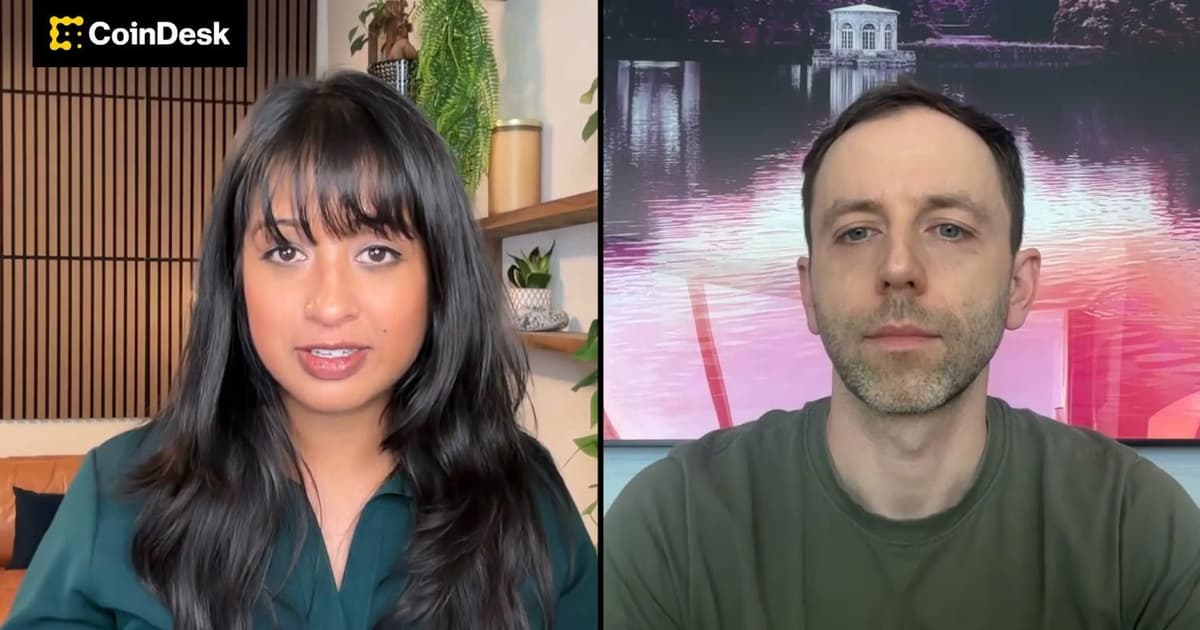
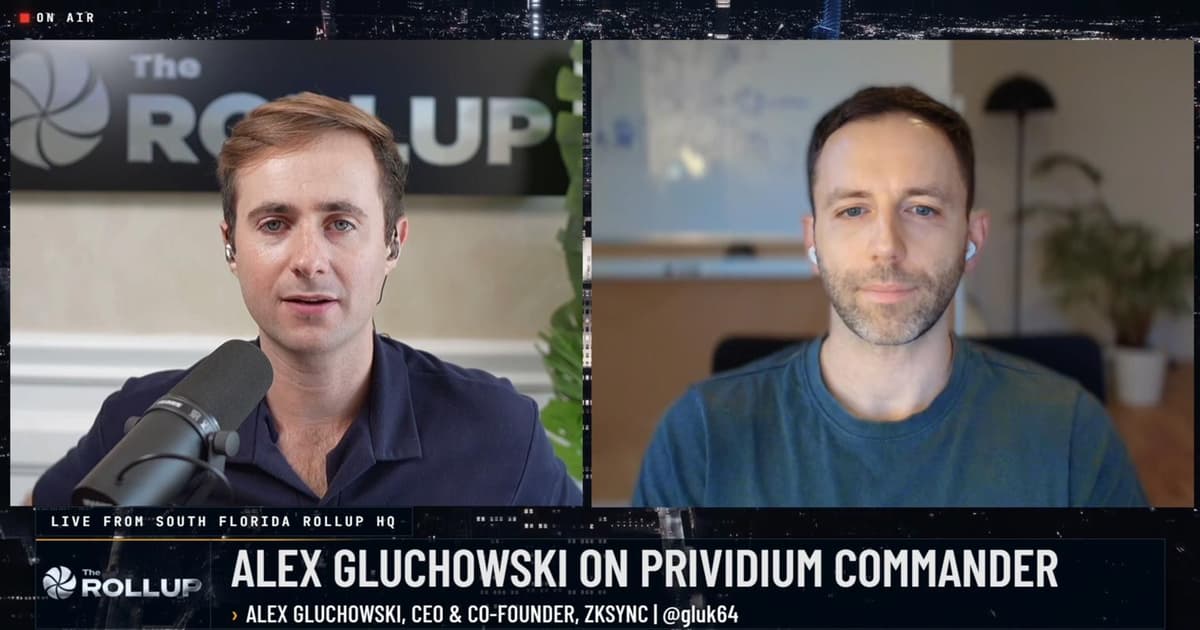
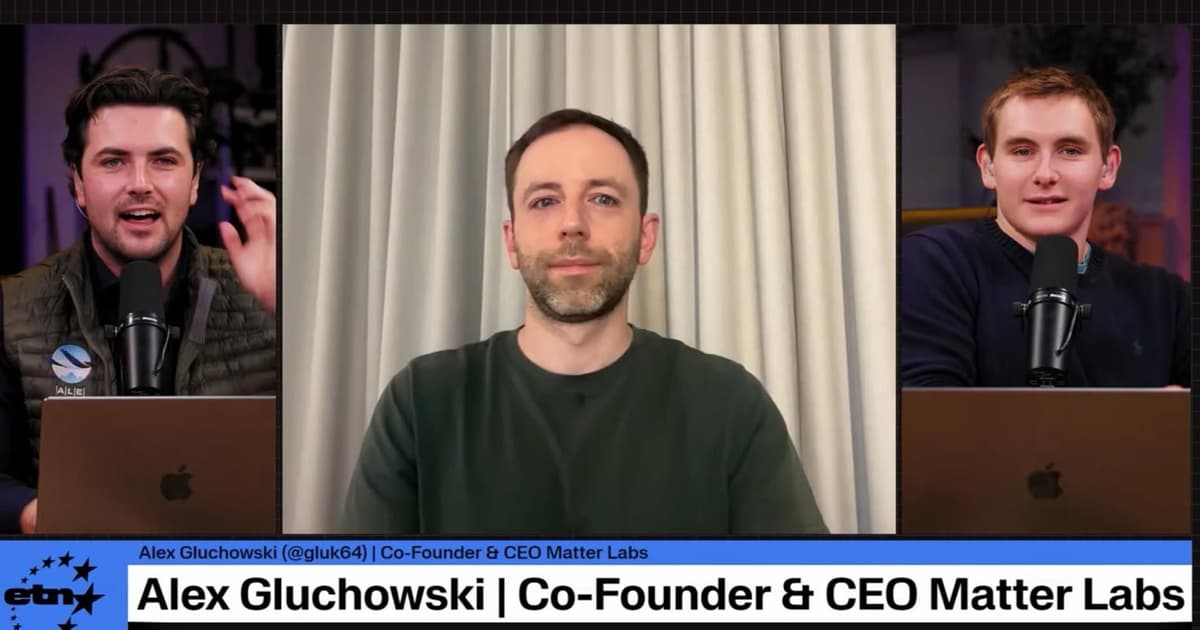
Alex Gluchowski, CEO and co-founder of Matter Labs, joins Sophia Dew on MTS to explain Prividium Commander, a control plane for banks, financial market infrastructures and trading venues running digital asset businesses on their own terms. He describes operational complexity as a major friction between pilots and production, and expects most institutions to connect private ledgers first, with public chains as the next step.
- Why permissions, policies, auditing and failed-transaction handling slow the move from pilot to production.
- Why regulated institutions are taking a crawl, walk, run approach to digital assets and AI.
- Why most institutions will connect private ledgers before moving to public chains.
- How Prividium Commander works on top of existing ledgers and public chains, with an upgrade path to Prividium Ledger.
Transcript
Sophia Dew: Hello everyone. Welcome back to MTS. Today we are joined live with Alex Gluchowski, who is the co-founder and CEO of Matter Labs. This is the company behind ZKsync. And they just launched Prividium Commander. And this helps banks take digital assets from pilots to production. So Alex, welcome to the show.
Alex Gluchowski: Excited to be here. Thank you for having me.
Sophia Dew: Yeah, thank you for joining. I think a great place to start is just, what is Prividium Commander? What did you guys announce? Why now?
Alex Gluchowski: Um, Prividium Commander is a platform for institutions, banks, FMIs, uh, trading venues, uh, to launch and run, uh, digital asset businesses on their own terms. So it’s a control plane that helps them operationalize the business, uh, of digital assets or any initiatives that they have. Uh, and, uh, the reason, uh, we built that, uh, or rather, like, separate the, the part of overall digital platform into Commander, was that we realized in working with financial institutions for the last two years that a large friction that they face very early on, uh, in going from pilots to actual production is the operational complexity of, uh, of running this business.
It’s not just building the blockchain technology that’s difficult. That’s a challenge on its own, but they, they kind of master it already. They understand, uh, digital assets, what blockchain-enabled smart contracts. All of that is something banks, uh, really, really kind of get now. Um, they realize that taking this service or product into production requires them to connect all of their banking users, to manage the permissions, manage the policies that they have, follow all the other compliance regulations, be able to manage the auditing, data insights, uh, figuring out what, what’s, what’s wrong if the transaction fails or transaction is rejected. Someone needs to understand that. All of that is a wrapper around the service itself and leads to them having to build and launch another software project around the actual project. And we saw, like, we, we make, we make it easy.
Sophia Dew: I think one of the really big things that’s happening recently is you have agents who are now acting on your behalf, especially when it comes into financial transactions. I would say we’re still at the very early days of this being more and more true, but I wanted to get your thoughts on just the macro level. What’s trending, what’s happening now that wasn’t totally true, maybe, let’s say, a year ago?
Alex Gluchowski: Uh, so my perspective is heavily biased by working with these regulated entities. And I will say that for them, the change is not yet as strong. In fact, many people we talked to are actually barely using AI, uh, even internally in their organizations. So they are, by the nature of their business, they are much more conservative. They’re going to be moving a lot slower. So I was on the panel at Money20/20 with the leaders of New York Stock Exchange, DTCC, Cari Network, and they shared the common theme. They said, we expect to follow the crawl, walk, run approach to digital assets, which kind of makes sense to them. So they, their adoption is going to be slower, but eventually they, of course, will come up and embrace the latest and greatest AI capabilities, applied both to public chains, and probably going to start from there, and then maybe going deeper into the private and more traditional parts of their financial stack.
Sophia Dew: So you say we’re still at the very early days, that actually regulators are more of these more institutional banks and financial infrastructure aren’t, still aren’t completely adopting it quite yet. What’s the biggest blocker? What’s the hardest part here?
Alex Gluchowski: I would say that the largest blockers have now been removed. The regulation itself and the friendly attitude of the administration was the major unblock. And from there it was a matter of education, building up knowledge within organizations, doing the first experiments and then pilots to actually see, like, what’s possible, uh, figuring out which of the, uh, um, business aspects of digital assets will justify investment, will have the potential to bring revenue or bring a lot more efficiency.
And now we’re in a phase where it’s going into production, and they are facing the challenges around operations. But that, again, is overcome. And we’re helping solve this with the product, with, with the services and consultancy. Uh, many other teams are working on this. At Money20/20, a large number of organizations, uh, present there were actually blockchain or digital asset teams. So you can imagine, like, how much effort is being put into this space. It’s, we don’t have any major blocker other than the actual need to implement and roll out these services.
Sophia Dew: Mhm. That makes a lot of sense. I know you guys were also at Money20/20. This is, uh, last week, so pretty recently. What was the big announcement? What did you guys share there?
Alex Gluchowski: Uh, so that was the, the, the Commander.
Sophia Dew: Oh, cool. Perfect. Well, I mean, now we’re going to share that here as well. Um, which is exciting. One of the things I wanted to ask you around, I mean, I come a little bit from the space, I used to work at Ethereum Foundation. This is a big area that I was particularly interested in, but I wanted to get your takes on timelines. I think we often, um, like share, okay, it’s all coming onchain, banks are coming onchain, but the actual timeline for when this happens, when the impact actually happens, is a lot longer. And so I wanted to get your thoughts on what you see these timelines actually being.
Alex Gluchowski: Oh, it’s going to happen this year. We’re working with Cari Network, for example. We’re going to go live with, uh, about thirty banks and hundreds more in the pipeline, uh, working with some of the largest FMIs, who are going to surprise everyone how fast they will move, and will offer some, uh, like tokenization of enormous amounts of assets.
Uh, but I want to caveat all of that by saying all of this is going to be running in private environments. So the, uh, big transformation for these institutions now is, is taking their, the private, um, ledgers that they have had internally in full isolation and connecting them together. And that’s already a huge breakthrough. But going to public assets, uh, to, to public chain space is a slightly different, uh, uh, I would say it’s going to be the next step for most of them. Um, although we already see, uh, you know, like someone like this issuing the, uh, uh, their tokenized deposits on Ethereum as, as recent as, as last week, and many others are experimenting. Uh, but that’s going to be a smaller part compared to, to what’s happening in just digital asset space overall on private terms.
Sophia Dew: Mhm. That makes a lot of sense. I want to get also your thoughts on, like, what actually this means as the next step for what you guys are doing with Matter Labs. What can people expect to see from Prividium Commander over the next few months?
Alex Gluchowski: Uh, so Commander is, is just the first touching point for institutions to, to, to join. Uh, it’s a very easy decision for them because it solves the immediate problem. And we don’t see anyone else solving these problems across various custody providers, across different blockchain technologies. Like matter does not require you to run a ledger. You can do it on top of your existing Besu chain. You can do it with public blockchains. Uh, but from there, you can expand. You can, if you want to upgrade to the latest and most cutting-edge technology, run Prividium Ledger, which is our secure, high-performance, proven chain. Uh, we will help you connect to other institutions, to, to, to the public markets. All of that is an upgrade, one upgrade away from, from deploying the Commander.
Uh, but I would say that, um, we hear from, uh, some players in the space that they are very actively looking into upgrading the core banking systems, uh, because they feel the pressure from AI and from the quantum advances, uh, to modernize and to be ready for the Q-Day and for the, whatever you call the, the, this.
Sophia Dew: Yeah.
Alex Gluchowski: Unknown unknowns that, that are going to unroll on, on the industry, because now, uh, the, you know, in the blockchain, a friend of mine said many, many years ago that Bitcoin is the best thing that happened to cybersecurity. And I think that, uh, it’s finally entering the, uh, the phase where they feel it in full, uh, like how dangerous it is to operate systems based on security by obscurity and not based on public standards, open to public scrutiny. Zero-knowledge proofs, blockchains can help, uh, defend yourself in this new era of AI and quantum.
Sophia Dew: Yeah. No, this is really fascinating. I think, especially when it comes down to how banks and traditional infrastructures are thinking about updating a lot of how they work because of AI, because of what you mentioned, like things like Q-Day. So we’ll be interesting to see how this all plays out. But Alex, really wanted to thank you for joining us today on MTS and sharing with the announcement of Prividium Commander and what this means for banks and the future of digital assets. So thank you so much for joining us.
Alex Gluchowski: Thank you, Sophia.
Sophia Dew: Thank you. And we’ll be back with MTS.